



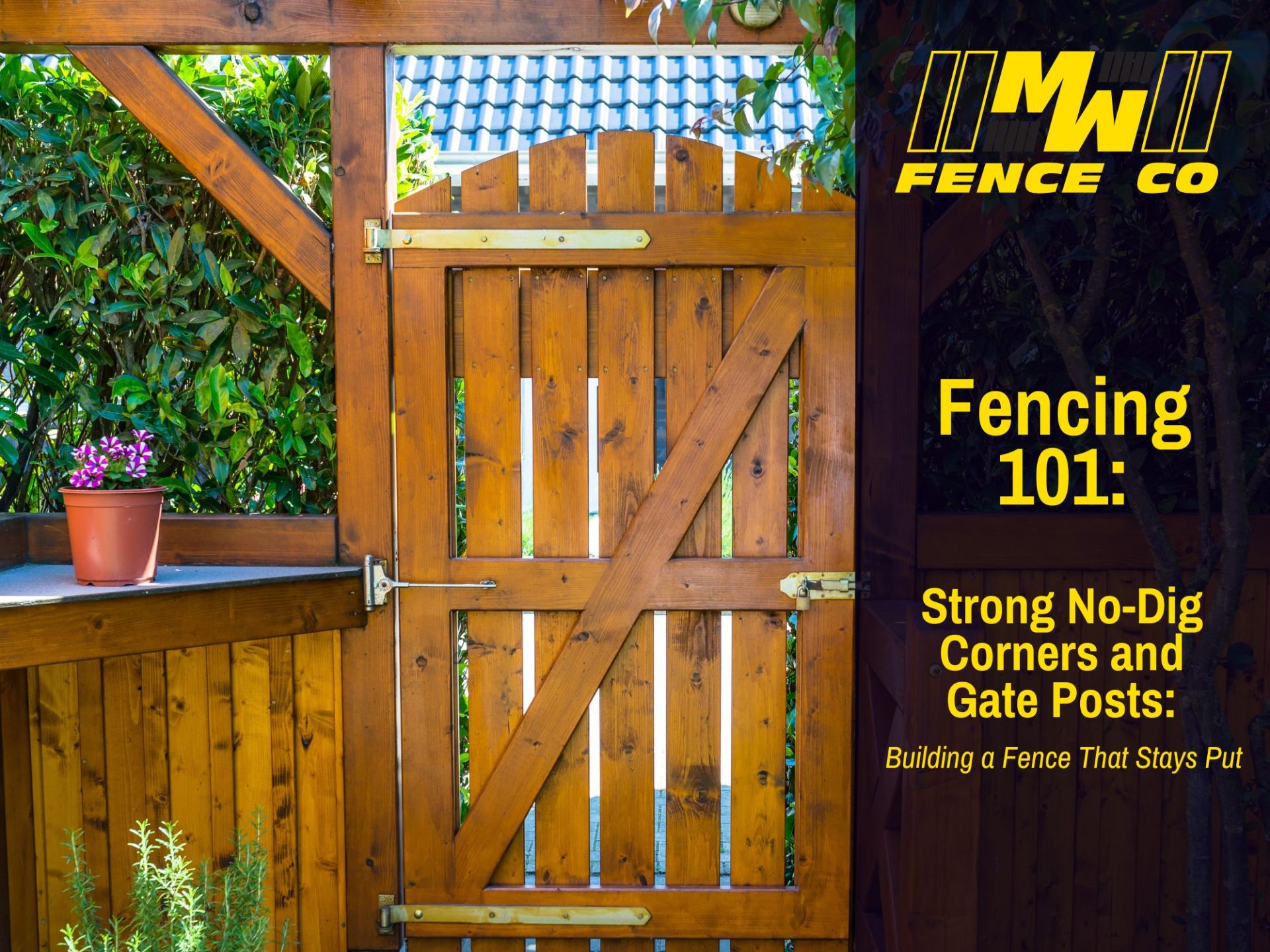
No-dig fence panels have changed the game for homeowners who want a cleaner, faster installation without torn-up yards or setting posts in concrete. But even the best no-dig system is only as strong as its highest-stress points—your corners, ends, and gate posts. These locations carry the bulk of the load, so they can’t be treated like just another line post.
At MW Fence, we design no-dig fences from the ground up, paying special attention to these “anchor points” so your fence doesn’t lean, sag, or twist over time.
Why Corners, Ends, and Gates Matter More
On any fence, certain posts work harder than others:
- Corner posts have to resist pull from two directions at once.
- End posts carry the tension of a full fence run in a single direction.
- Gate posts support the weight of the gate plus the constant opening and closing forces.
In a no-dig system, those forces are transferred through the post into a driven anchor rather than a concrete-filled hole. If those anchors aren’t sized, spaced, and installed correctly, the stress shows up fast—usually as leaning corners, sagging gates, or panels that go out of alignment.
Heavier Anchors for High-Stress Posts
Not every post should use the same anchor. For a stronger no-dig fence, MW Fence often upgrades the foundation at critical locations:
- Larger or longer anchors at corners and ends: These penetrate deeper and grip more soil, improving resistance to wind and tension along the fence line.
- Reinforced gate posts: Gate hinges concentrate a lot of force on a small area. Heavier-duty anchors and sometimes paired posts or brackets help distribute that load and prevent wobble.
- Hybrid designs when needed: Some cases—like an extra-wide gate or an exposed hilltop—may use no-dig line posts but a more robust foundation at corners or gate posts for added security.
The goal is simple: treat high-stress posts like structural elements, not just attachment points.
Smart Spacing and Layout for No-Dig Fencing
Panel spacing isn’t just about looks; it affects how much load each post has to carry. When MW Fence designs a no-dig project, we consider:
- Shorter spans near gates: Reducing the distance between posts around a gate area helps control sway and limits flex when the gate swings.
- Balanced runs from corners: Creating reasonably even panel lengths on each side of a corner post avoids overloading one direction.
- Post alignment on slopes: On hills or uneven ground, slight adjustments in spacing and height keep panels squared and reduce the twisting force on anchors.
This planning pays off every time the wind blows—or every time someone slams the gate.
No-Dig Fence Panels, Built on a Strong Backbone
No-dig fence panels (vinyl, aluminum, steel, or composite) can be incredibly reliable when they sit on a strong, well-thought-out foundation. That includes:
- Choosing panel styles and heights that match what the soil and anchors can realistically support.
- Using quality hardware at gates—hinges, latches, and braces—to reduce strain on posts.
- Aligning the look (clean, modern lines) with the structure (hidden steel strength where it matters most).
Instead of just “making panels fit,” MW Fence builds a fence system—posts, anchors, panels, and gates that work together.
Contact MW Fence for Strong No-Dig Fences
If you’re considering no-dig fencing, the difference between a fence that looks good on day one and one that still stands straight years later often comes down to how corners, ends, and gates are built. MW Fence specializes in no-dig fence design and installation that goes beyond the basics, with reinforced anchor strategies and thoughtful layouts tailored to your property.
Contact us today to schedule a consultation and learn how our no-dig fence solutions can give you a clean install, strong gates, and corners that stay put.