



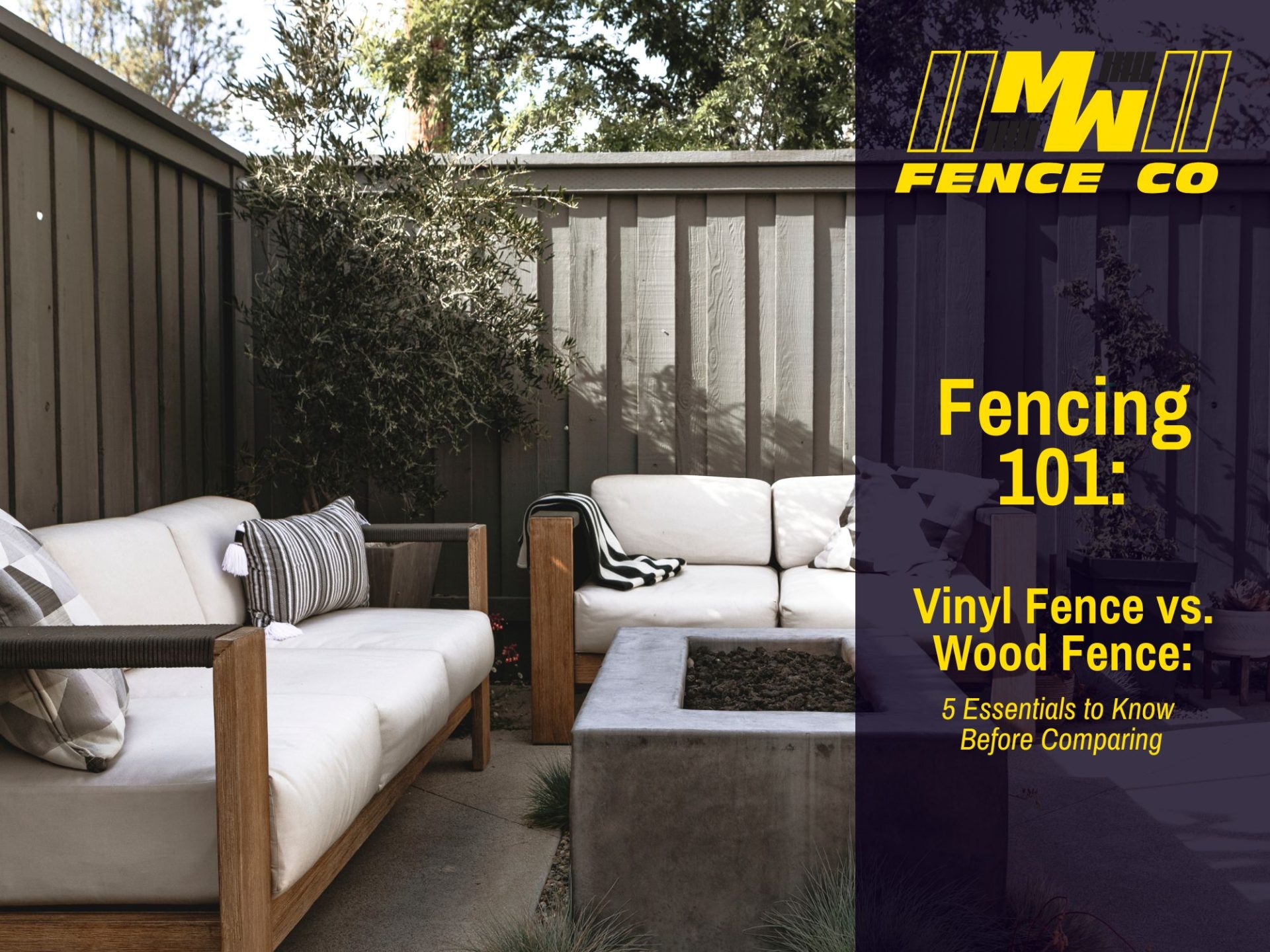
Most comparisons between vinyl and wood fencing skip straight to cost and lifespan without covering what actually makes these two materials different. Before you can evaluate which one is right for your yard, you need to understand what you are actually comparing. This is Part 1 of a two-part breakdown covering four essentials that most comparisons skip entirely. Those essentials are your HOA requirements, the wood species question, how installation method affects lifespan, and what maintenance actually demands from each material.
Start Here: Check Your HOA First
The first question to answer is not which material is better. It is whether your homeowners association has already decided for you.
Some HOAs require a white vinyl privacy fence and nothing else. Others want wooden privacy fencing to maintain a consistent look throughout the neighborhood. If you are in an HOA and skip this step, you may spend time comparing materials that are not even on the table. It's best to pull your HOA documentation and confirm what is approved before going further.
Wood Fencing Is Not One Product
The species you choose changes how wooden fencing performs, how long it lasts, and how it holds up against the local climate. Treating wood as a single material is where most comparisons go wrong.
Untreated pine is the most affordable option and also the most vulnerable. Without consistent sealing and staining, it struggles against moisture and insects over time. Its pale, yellowish color also requires more deliberate stain choices to achieve a polished look.
Western red cedar operates differently. Its natural oils resist rot and insects without any chemical treatment, and a properly maintained cedar fence can rival vinyl fencing's lifespan. Cedar rewards occasional sealing or staining even though it does not require it the way pine does. That treatment pushes the lifespan further and enhances cedar's natural warm reddish tone, which stains well and finishes cleanly.
Pressure-treated pine falls in the middle. Chemical preservatives extend pressure-treated pine's lifespan, but the treatment leaves a greenish tint that fades over time. It also comes with tradeoffs in cost and handling.
Grade matters within species as well. Higher-grade lumber has fewer knots and more uniform grain. Those qualities affect how evenly the fence takes a stain and how it holds up through years of weather exposure. Two cedar fences quoted at different price points are not always the same product.
Cedar fencing in Joplin and across the Four States area changes the long-term value comparison significantly. Before comparing wooden fencing to vinyl fencing, clarify which species and grade you are actually pricing. Whether wood fencing or vinyl fencing is the better long-term investment lands differently for high-grade cedar than it does for untreated pine.
The No-Dig Factor Changes Wood Fencing's Outlook
If you are considering wooden fencing on a no-dig system, the standard lifespan estimates do not apply the same way.
Traditional wooden fences fail most often at the post. When wood contacts the ground, it absorbs moisture from below, and that is where rot begins. No-dig installation removes that equation entirely. Steel handles the structural posts, which means wooden rails and pickets never touch the soil. They stay above grade and dry out properly. Wooden fencing on a no-dig system outlasts a traditionally installed wood fence by several years, which makes the lifespan comparison against vinyl fencing closer than most homeowners expect going in.
Maintenance: What Each Material Asks of You
The maintenance gap between wooden fencing and vinyl fencing is real and seasonal; understanding it upfront shapes the rest of the comparison.
Wooden fencing needs staining or sealing every two to three years to hold up against moisture, UV damage, and rot. Skip that cycle and the boards start to gray, crack, or warp. The work is not difficult, but it is a recurring commitment that adds up over time.
Vinyl fencing asks much less day to day. A garden hose handles most cleaning, and there is no painting, staining, or sealing involved. The limitation shows up at the other end. A PVC fence cannot be repainted or refinished the way wooden fencing can. The low-maintenance advantage is genuine, but it comes with a ceiling on what you can do if you want to change the appearance later.
Up Next: A Comparison of Real-World Performance
Part 2 moves into real-world conditions. It covers how the hollow vs. solid construction difference plays out at installation and after impact, and how vinyl and wooden fencing hold up against Midwest weather. It also looks at what termite activity means for the wood species question, how to think through total cost, and which material is the right fit for your specific yard.
[Link to Part 2: Vinyl Fence vs. Wood Fence: How to Choose the Right One for Your Yard]
MW Fence installs both wooden and vinyl fencing in Joplin, Webb City, MO and across the Four States area. Have questions before reading Part 2? Give us a call or reach out online. We're always happy to help!