



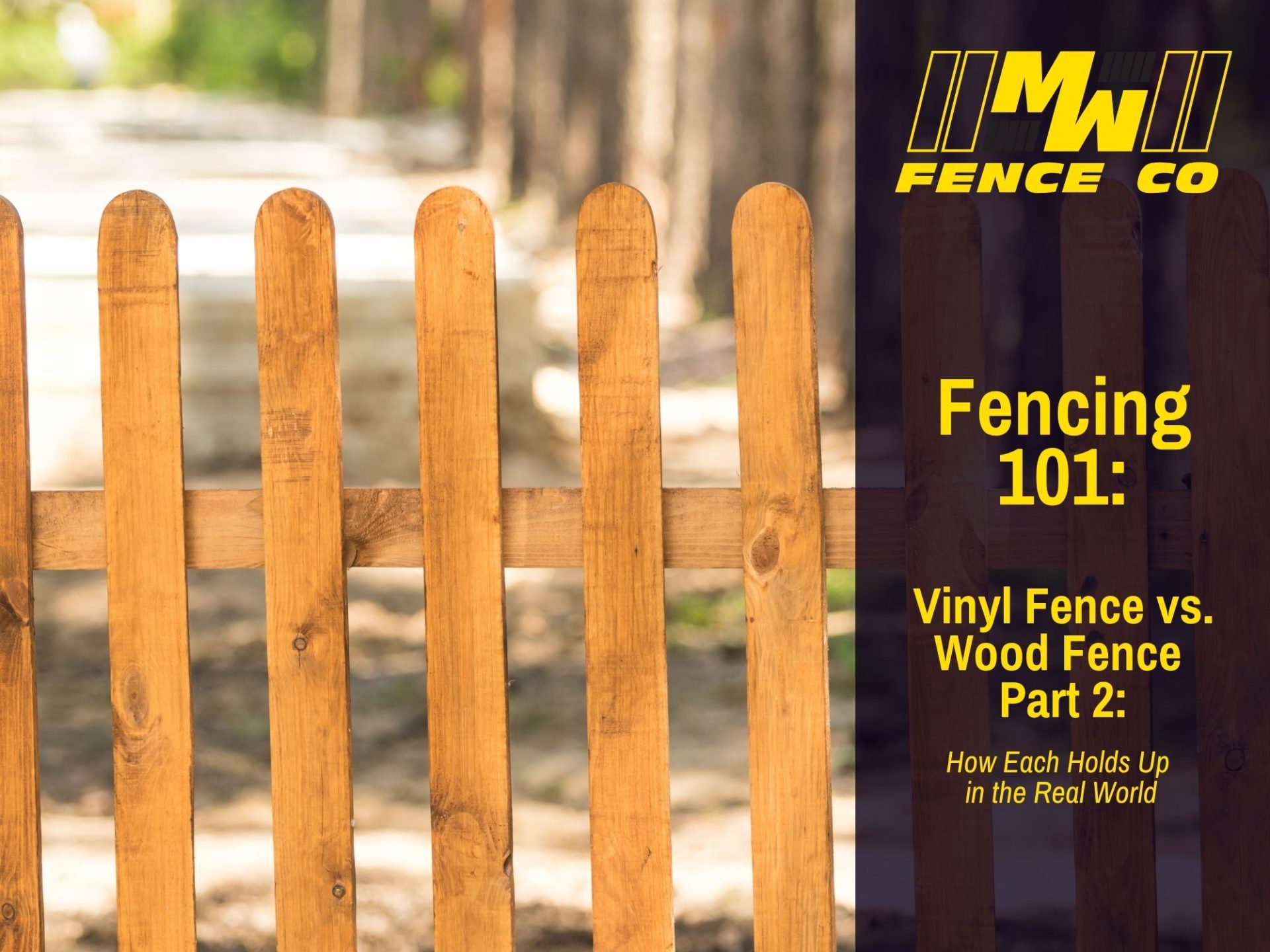
Part 1 of this series covered the foundational differences between vinyl fencing and wooden fencing. This part covers how each holds up in real conditions and how to use that to make the right call for your yard.
[Internal link: Vinyl Fence vs. Wood Fence: 4 Essentials to Know Before Comparing]
Solid vs. Hollow: A Structural Difference That Matters
Wooden fence boards and rails are solid through. Vinyl fence components are hollow. That difference matters most after something hits the fence.
A falling branch, debris from a mower, or a vehicle bumper catching a panel will shatter hollow vinyl fencing cleanly. The same impact on solid wood fencing cracks or splits the board. The piece usually stays partially intact and rarely requires full section replacement. Repairs on a wooden fence are straightforward: match the board, cut it to length, nail it in. Vinyl fencing in Webb City and across the region tells a different story. Sourcing a replacement panel from the same product line is the only option, and that panel may be discontinued or slightly off in color from years of weathering.
Hollow vinyl fencing carries one practical advantage. Less mass on the panels puts less lateral stress on the no-dig anchor system over time, which adds up across longer fence runs.
How Midwest Weather Affects Each Material
Both vinyl and wooden fencing hold up well in normal conditions. Where the differences appear is under the specific weather stress this region delivers.
Cold weather is harder on vinyl fencing than most people realize. As temperatures drop well below freezing, PVC fencing loses flexibility and becomes brittle. A branch impact or other contact that would leave a crack in warmer months can shatter vinyl fencing outright in January. For properties with overhanging trees, a high-traffic gate, or any regular source of impact — common conditions for vinyl fencing in Carthage — that brittleness is worth factoring in before you choose.
Wooden fencing handles cold impact better, but freeze-thaw cycles are its winter vulnerability. Moisture pushes in and out of untreated boards repeatedly through the season, causing swelling, surface cracking, and splits over time. Wooden fencing in Joplin and throughout the Four States area runs through that cycle every winter. Sealing wooden fencing before the cold sets in reduces that risk, and timing that maintenance matters as much as how often you do it.
Insects and the Four States Region
In the Four States area, termite activity makes the wood species choice more than a budget or aesthetic decision.
- Untreated pine is the most vulnerable to termite damage.
- Cedar fencing resists insects naturally through its oils, without any chemical treatment required.
- Pressure-treated lumber addresses the risk chemically, though it comes with handling and cost tradeoffs of its own.
- Vinyl fencing sidesteps the insect question entirely, which is a genuine advantage in a region with consistent termite pressure.
For homeowners considering wooden fencing in Neosho and across the Four States area, the insect risk is not hypothetical. Cedar is the species worth asking about specifically. It's the only wood option that handles termite pressure without adding chemicals to the equation.
Which One Fits Your Situation?
The right fencing material comes down to three things: your budget, how much ongoing maintenance you are willing to take on, and the specific conditions of your property.
Both vinyl fencing and wood fencing hold up well under the right conditions. The difference shows up in impact recovery, how each material handles the winter seasons, and which species makes sense for your yard.
MW Fence installs both wooden and vinyl fencing across the Four States area. If you want to talk through which option makes sense for your yard, give us a call or reach out online to get started.