



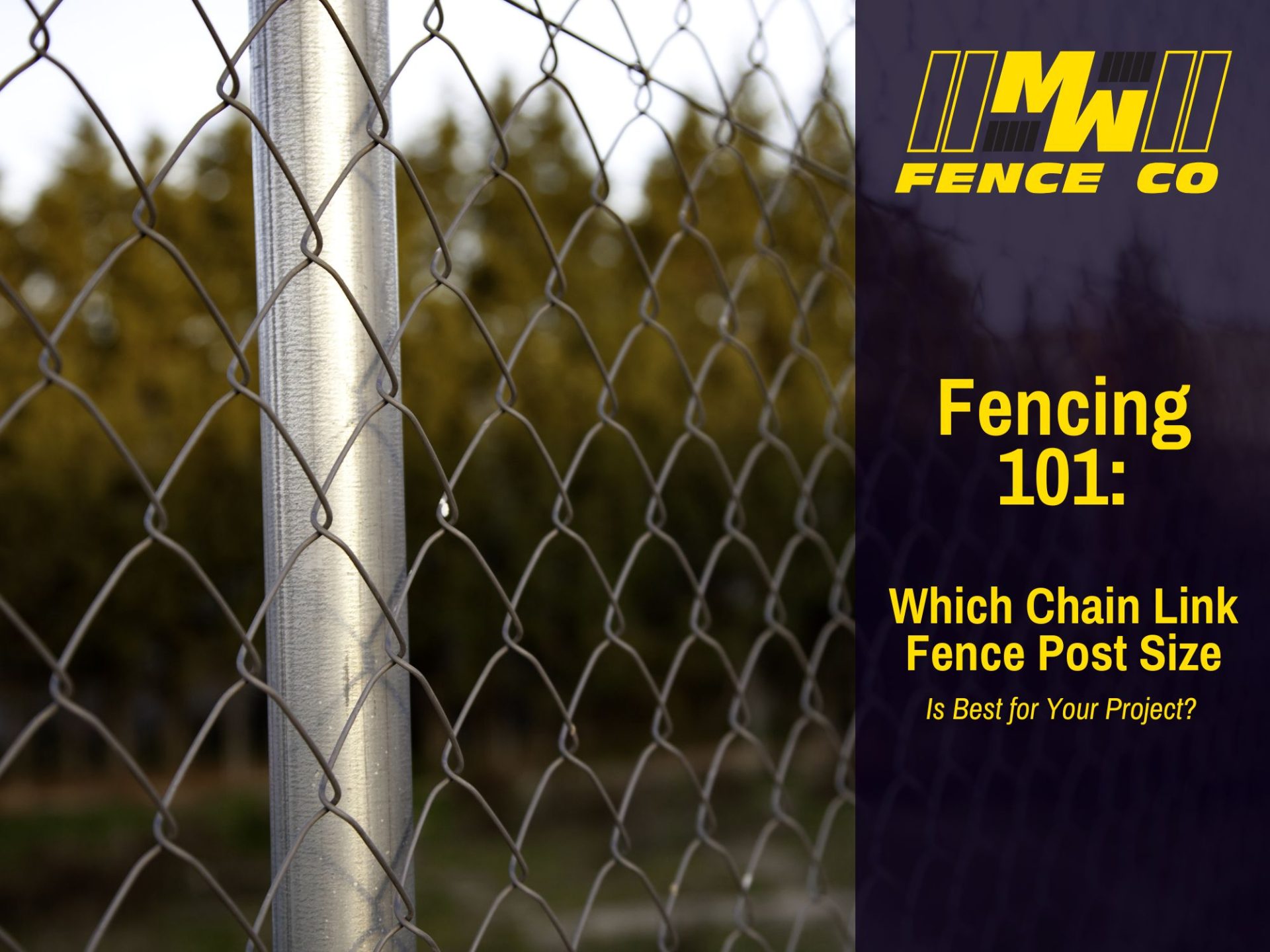
Selecting the right chain link fence post sizes is crucial for building a fence that stands strong for years to come. Whether you're securing a backyard, enclosing a commercial property, or creating a safe play area, understanding post dimensions helps you make an informed decision.
What To Know About Chain Link Fence Post Sizes
Chain link fence posts come in various diameters and wall thicknesses, measured in inches and gauge. Projects usually require a combination of line posts and terminal posts, and there is a big difference between residential grade and commercial grade, with some variations in between. The most common residential chain link fence post sizes are 1 ⅜-inch, 1 ⅝-inch, and 2-inch outer diameter posts. Commercial applications typically require larger 2-inch all the way up to 6-inch posts, for added strength for taller heights, heavier gates, and extra security.
Wall thickness is a common term, measured by gauge, and also affects post strength. Lower gauge numbers indicate thicker walls—for example, 16-gauge posts have thicker walls than 20-gauge posts, making them more durable and better suited for demanding applications.
Residential Chain Link Fence Post Sizes
For very light residential chain link applications, most box stores sell lightweight 17-18 gauge posts that are 1 ⅜-inch for line posts and 2-⅜ inch for terminal posts. Most reputable contractors provide 1 ⅝-inch 16-gauge line posts and 2-⅜” terminal posts. These chain link fence post sizes work well for standard four-foot or six-foot fences around backyards, gardens, and pet enclosures.
If you're installing a fence in an area with high winds or if you need extra height, upgrading to 1-⅞-inch posts with heavier gauge walls ensures better stability. The additional cost is minimal compared to the peace of mind that comes with a fence built to last.
Commercial Chain Link Fence Post Sizes
Commercial properties, schools, sports facilities, and industrial sites demand more robust chain link fence post sizes. 1-⅞ inch line posts and 2-⅞ inch 14-gauge terminal posts are the most common, and go up in size and down in gauge from there. These thicker posts handle taller fences, heavier fabric, and greater stress from daily use, and are not typically available at box stores.
For high-security areas or fences exceeding eight feet in height, 2 ½-3 inch line posts and 3-4 inch terminal posts offer maximum strength and longevity. Choosing appropriately sized posts from the start prevents sagging, leaning, and costly repairs down the road.
Factors That Influence Your Choice
Several factors determine which chain link fence post sizes work best for your project:
- Fence height: Taller fences require larger diameter posts to maintain stability.
- Fabric gauge: Heavier chain link fabric needs stronger posts for proper support.
- Soil conditions: Loose or sandy soil may require deeper post placement or larger posts to prevent shifting.
- Wind exposure: Properties in windy areas benefit from thicker, more durable posts.
- Gate locations: Terminal posts at gates and corners should be larger than line posts to handle additional stress.
Making the Right Decision
Choosing the correct chain link fence post sizes will help your fence perform as expected throughout its lifespan. While it might be tempting to save money with smaller posts, undersized posts lead to premature failure and expensive repairs.
Working with experienced fence professionals helps you select posts that match your specific needs, local building codes, and budget. They can assess your property conditions and recommend chain link fence post sizes that provide the right balance of strength, durability, and value.
Whether you're planning a simple backyard fence or a complex commercial installation, MW Fence brings over 20 years of expertise to the Joplin metro area. Schedule your free estimate today or use our online budget estimator tool to start planning your perfect fence.